
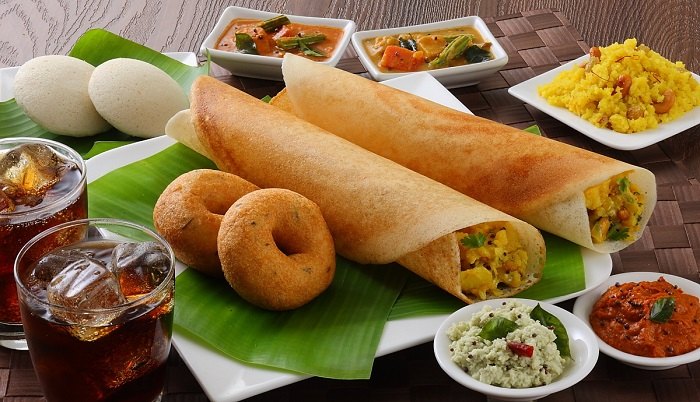

A rich tapestry of flavors, colors, scents, and textures characterizes South Indian cuisine. Deeply ingrained in custom but remarkably adaptable, it highlights the complexity and diversity of southern India’s culture. South Indian cuisine, which includes the states of Tamil Nadu, Kerala, Karnataka, Andhra Pradesh, and Telangana, is renowned for its strong spice blends, heavy reliance on rice and lentils, and well-balanced nutritional value and flavor. This page provides a thorough exploration of South Indian food, including its history, specialties, methods of preparation, ingredients, and customs that have shaped its distinctive flavor.
1. South Indian Cuisine’s History and Philosophy
Ancient customs, many of which have Ayurvedic influences, form the basis of South Indian food. The diet is intended to balance the three doshas (vata, pitta, and kapha) and nourish the body in addition to pleasing the palette. Despite the prevalence of non-vegetarian cuisine in various areas, the majority of meals are vegetarian. In order to promote sustainability and health, the cooking places a strong emphasis on using whole grains, seasonal vegetables, and fresh ingredients.
2. Basic Ingredients: Coconut, Rice, and Lentils
Most South Indian dishes have rice as the main ingredient, which can be prepared in a number of ways, including steamed rice, dosas (rice crepes), idlis (steamed rice cakes), and uttapams (rice pancakes). Another crucial ingredient is lentils, especially urad dal (black gram) and toor dal (pigeon peas), which are used in sambar, rasam, and other chutneys. Grated, ground, or used as milk and oil, coconut is used in many recipes, particularly in Keralan cooking, where it adds a creamy texture and subtle sweetness.
3. Tamil Nadu’s Flavors
The food of Tamil Nadu is powerful, spicy, and rich in aromas. It is distinguished by the liberal use of asafoetida, mustard seeds, curry leaves, and tamarind. Steamed rice, sambar, rasam, kootu (lentil and vegetable stew), poriyal (stir-fried vegetables), appalam (crispy wafers), pickles, and curd are all common ingredients of a traditional Tamil dinner, particularly Sappadu served on a banana leaf. This region’s well-known Chettinad cuisine is renowned for its savory meat dishes like Mutton Chukka Varuval and Chettinad Chicken Curry, as well as its intricate spice mixes.
4. Kerala: The Unique Cuisine of God’s Own Country
Kerala’s diverse culture and gorgeous landscape are reflected in its food. Seafood is the main ingredient here, and meals are frequently seasoned with green chilies, coconut oil, and fresh curry leaves. With more than 20 dishes like avial, thoran, olan, pachadi, and payasam, the Sadya is a joyous vegetarian feast that is served on a banana leaf. Famous cuisines for non-vegetarians include Malabar Prawn Curry, Kerala Beef Fry, and Meen Moilee (fish in coconut milk curry). The long history of Kerala’s spice trade is reflected in the use of spices like cardamom, cloves, and cinnamon.
5. The Diverse Food Culture of Karnataka
Karnataka’s diversified terrain and many cultural traditions have inspired the state’s extraordinarily varied cuisine. Seafood specialties that are high in coconut and tamarind are well-known in coastal areas like Mangalore. Conversely, the North Karnataka belt prefers hotter foods like Yennegai (stuffed brinjal stew) and Jolad Roti. Bangalore, a center of globalization, provides a blend of South Indian and international cuisine. Bisi Bele Bath, a hot lentil-rice meal flavored with ghee, spices, and vegetables, is a Karnataka specialty.
6. Telangana and Andhra Pradesh: The Land of Flavors & Spices
Bold flavors and a love for red chilies are hallmarks of Andhra cuisine, which is known for being hot. Rice is frequently served with a variety of pickles, such as the tart Avakaya (mango pickle), pappu (dal), pulusu (tamarind-based stew), and koora (dry curry). Though similar, Telangana cuisine focuses more on meat-heavy recipes like Mutton Dalcha and Natu Kodi Pulusu (country chicken curry), as well as millet-based foods. A local favorite, gongura (sorrel leaves) can be found in both vegetarian and meat recipes.
7. The Art of Breakfast in South India
The breakfast spread is arguably the most cherished feature of South Indian cuisine. Light, nourishing, and frequently fermented, foods like idli, dosa, vada, and pongal have gained popularity all over the world. Sambar and a variety of chutneys (coconut, tomato, and mint) are usually offered with these dishes. One of the region’s culinary ambassadors is the masala dosa, a crispy crepe stuffed with spicy potatoes. Strong and fragrant filter coffee goes well with this substantial lunch.
8. Sambar, Rasam, and Chutneys: The Holy Trinity Sambar is a vegetable stew made with tangy lentils that is a staple in all South Indian states, however regional variations exist in the recipes. Consumed for its digestive properties, rasam is a thin, spicy soup that is frequently mixed with tamarind and pepper. Both fresh and preserved chutneys are essential seasonings. Everyday classics, coconut, tomato, and onion chutneys give otherwise straightforward meals a taste boost.
9. Traditional Equipment and Cooking Methods
Steaming, slow simmering, and tempering (tadka) are all key components in South Indian cookery. Tempering is the process of releasing the smells of spices by cooking them in oil or ghee and then pouring the mixture over cooked food. The Idli steamer, Muram (winnowing tray), and Ammikal (stone grinder) are examples of traditional implements. In rural regions, clay pots are still used to cook rice dishes and curries, adding to their authenticity and flavor.
10. The Key to Health and Flavor: Fermentation
South Indian food relies heavily on fermentation, particularly in recipes like appam, dosa, and idli. It boosts the nutritional value, facilitates digestion, and supports gut health in addition to improving the flavor and texture. Due to South India’s environment, which is especially conducive to spontaneous fermentation, these meals are commonplace in many homes.
11. Southern Street Food Delights
South India has a wide range of street food options, while not being as well-known worldwide as North Indian cuisine. Hot vadas and kothu parotta are served at roadside stands throughout Tamil Nadu. Bajji (vegetable fritters) and Churumuri (spicy puffed rice salad) are famous in Karnataka. Both Telangana’s Pesarattu (green gram dosa) and Andhra’s Mirapakaya Bajji are popular dishes.
12. Desserts & Sweets from South India
Sweets are used in everything from temple offerings to holiday confections. Desserts that are popular include:
Payasam: A rice, lentil, or vermicelli-based sweet pudding sweetened with almonds and cardamom.
Karnataka’s rich, ghee-filled treat is called Mysore Pak.
Kesari: A dessert made from semolina and frequently flavored with pineapple or saffron.
Every state has its own characteristics, which are frequently connected to holidays and customs.
13. Ritual Offerings and Festival Foods
Festivals like as Pongal, Onam, Ugadi, and Vishu offer distinctive cuisine. In Tamil Nadu, Pongal is prepared in both savory and sweet varieties. While Ugadi, the New Year for many South Indian cultures, offers foods that mix six tastes (sweet, sour, salty, bitter, pungent, and astringent) to signify life’s events, Onam’s Sadya is a sumptuous vegetarian feast.
14. Satvik Meals and the Influence of Ayurveda
Particularly in temples, vegetarian South Indian cuisine is strongly influenced by Ayurveda. These dishes, referred to as Satvik Bhojan, stay away from garlic, onions, and potent spices. In temples like those in Madurai and Udupi, they are frequently served as Prasadam, or sacred meal, and emphasize sustenance and balance.
15. How Community and Hospitality Affect South Indian Dining
In South India, eating is a social activity. Banana leaves are used to serve meals, which promotes environmental awareness and improves flavor. Traditionally, hosts make sure that plates are never empty and guests are served first. The region’s friendliness is reflected in the ethos of Atithi Devo Bhava, which means “The guest is God.”
16. Modern South Indian Cuisine and Globalization
The cuisine of South India has spread far beyond the subcontinent. Dosa cafés can now be found in Tokyo, New York, and London. Chefs are reinventing traditional recipes by making fusion foods like avocado chutney, millet pongal, and quinoa idli. Although purists would object, this innovation demonstrates how versatile and timeless South Indian food is.
17. The South Indian Kitchen and Sustainability
A traditional South Indian kitchen encourages sustainability by using fermented foods to cut down on waste, using banana leaves instead of plastic dishes, and using less water to grow millets, which are currently experiencing a resurgence. In many homes, the farm-to-table philosophy is a way of life rather than a passing fad.
18. South Indian Cuisine’s Future
Many people are gravitating to South Indian cuisine because of its plant-based, low-oil, and nutrient-rich dishes as they become more conscious of the importance of eating healthily. The area is seeing a rise in culinary tourism, and in an effort to maintain their culture, newer generations are studying traditional recipes.
19. Mastering the Art of Cooking South Indian Cuisine
Start with the fundamentals like sambar, coconut chutney, or dosa batter if you’re keen to experience South Indian cuisine. Invest on some essential spices, such as dried red chilies, curry leaves, mustard seeds, and fenugreek. To gain a deeper understanding of techniques and cultural background, watch regional cooking videos or enroll in a cooking class.
20. Concluding Remarks: Honoring Tradition and Flavor
More than just a set of recipes, South Indian cuisine is a celebration of nature, community, and life. Stories about the region, ancient knowledge that has been passed down through the years, and a complex yet comfortable food are all told. South Indian food exudes warmth, depth, and soul whether it is consumed in a busy urban café, a beach village, or a temple town.