
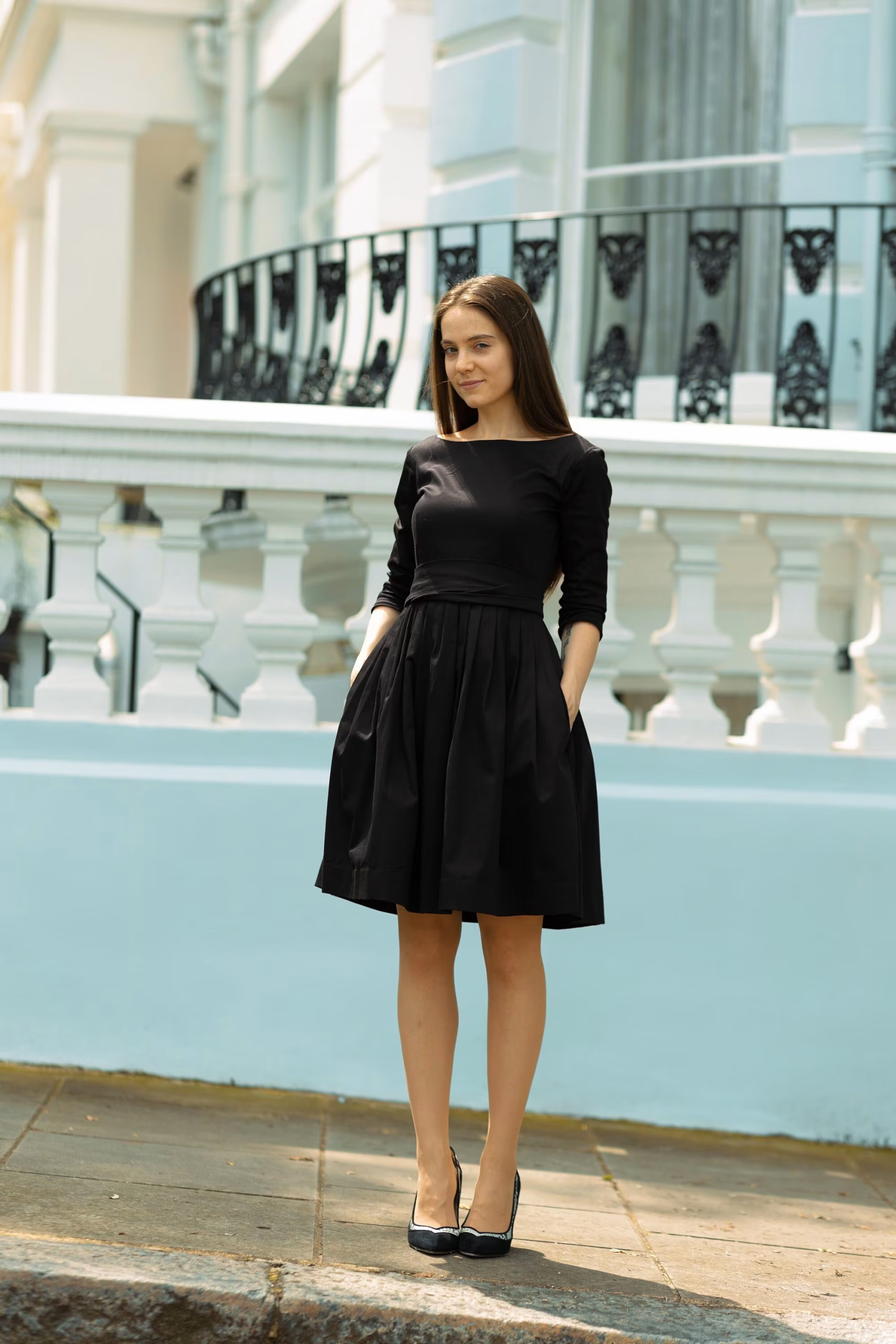

The black dress, which is frequently praised as the necessary item in any woman’s closet, has endured over time as a representation of grace, refinement, and adaptability. From the classic little black dress (LBD), made popular by Coco Chanel in the 1920s, to the numerous contemporary styles seen on red carpets and runways today, the black dress has developed into more than just a fashion accessory; it is now a reliable go-to for any occasion, a cultural statement, and an expression of individual style.
This essay examines the black dress’s intriguing past, cultural significance, and ongoing appeal. We will look at its history, how it has changed over the years due to fashion changes, how it fits various body shapes, and why it still has a special place in closets all around the world. This thorough guide will show you why the black dress is so much more than just a piece of apparel, regardless of whether you’re a fashionista or looking for ideas for your next wardrobe staple.
1. The Black Dress’s History
Although the idea of wearing black as a basic piece of clothing dates back centuries, the black dress really started to gain popularity in the early 20th century. Black has traditionally been connected to clerical dress, modesty, or grief. The way that black was viewed in fashion didn’t drastically shift until the 1920s, when Coco Chanel debuted a short, straightforward black dress in Vogue magazine.
At the time, her design was groundbreaking since it was simple, adaptable, and attractive. Vogue referred to it as “Chanel’s Ford,” implying that, similar to Henry Ford’s reasonably priced car, the black dress would become a standard of style that ladies from all backgrounds could afford.
2. The Revolution of the Little Black Dress (LBD)
After Chanel’s invention, the phrase “little black dress” became ingrained in fashion lingo. The LBD swiftly rose to prominence as a representation of carefree style that worked for almost any occasion, including dinners, cocktail parties, and even business settings. Its simplicity and versatility were its greatest selling points.
The LBD was redesigned by designers over the years to conform to changing fashion standards. For example, Audrey Hepburn’s performance as Holly Golightly in Breakfast at Tiffany’s in the 1960s solidified the LBD’s status in fashion history. One of the most famous pictures in movie and fashion history is her elegant Givenchy outfit with pearls and a cigarette holder.
3. The Decades of the Black Dress
The black dress was reinterpreted and given a unique flair with each decade:
1930s–1940s: Black satin or silk floor-length dresses with nipped waists and padded shoulders were in style.
1950s: Christian Dior’s “New Look” featured black gowns with slim waists and wide skirts, emphasizing hourglass forms.
1960s: Shorter hemlines and black geometric silhouettes were popular in mod fashion.
1980s: As power dressing gained popularity, black dresses began to feature bolder accessories and shoulder pads.
1990s–2000s: Sleek, body-hugging styles were popularized by minimalist trends, which placed an emphasis on simple elegance and clear lines.
4. Why Everyone Looks Good in a Black Dress
The universality of the black garment is among its most potent qualities. Any woman can look great in a well-chosen black dress, regardless of her body type, skin tone, or personal preferences.
All people find that black slims them down. It enhances the body’s natural curves while minimizing apparent problem spots and hiding shadows.
Adaptability
The ideal blank canvas is the black dress. It is appropriate for almost any event because it can be dressed up or down with scarves, shoes, jackets, and accessories.
Timelessness
A timeless black dress never goes out of style, in contrast to goods that follow trends. Purchasing a high-quality black dress ensures that you will always have a go-to choice.
5. A Black Dress for Any Event
The adaptability of the black dress is its true power. Here’s how to modify it for different contexts:
Easygoing Daytime Clothes
For brunch or shopping, a casual yet fashionable style can be achieved with a denim jacket, shoes, and a cotton black shift dress or T-shirt dress.
Work clothes
A jacket, pumps, and a knee-length black sheath dress are a tried-and-true business attire combination.
Evening Style
For formal occasions or gala evenings, a long, flowing black gown with metallic accents is a timeless option.
Cocktail Party
An A-line or body-con short black dress with heels and a clutch is the ideal combination of sophisticated and playful.
6. Fabric Issues
The way a black dress looks and feels is greatly influenced by its fabric:
Cotton: Excellent for casual daily wear.
Satin and silk give off an opulent vibe and are perfect for formal or nighttime settings.
Velvet: Especially appropriate for winter, it adds richness and substance.
Lace: a delicate and feminine fabric that works well for romantic settings.
Wool or crepe are great options for chilly climates or office environments.
7. Pop Culture’s Black Dresses
The black dress has become a mainstay of popular culture, frequently used to express elegance, mystery, or empowerment in music, movies, and television shows. Numerous famous people, including Rihanna and Marilyn Monroe, have made memorable entrances on the red carpet wearing black outfits.
Princess Diana’s figure-hugging black off-the-shoulder “revenge dress,” which she wore the night Prince Charles confessed to infidelity, is arguably the most well-known example. The garment conveyed a strong message of self-reliance, strength, and creativity.
8. Eco-Friendly and Moral Black Dresses
Nowadays, a lot of manufacturers are selling black dresses that are created ethically as fashion grows more aware of its impact on the environment. These are made from eco-friendly materials like recycled polyester, Tencel, and organic cotton. Selecting a classic black dress that is produced sustainably guarantees that you are spending money on fashionable yet ethical clothing.
9. Accessories’ Function
A black dress can be totally changed with accessories. With a few easy adjustments, the same LBD can be appropriate for a variety of occasions:
Pearls with a clutch: Ideal for formal occasions or dinners.
Bold statement jewelry gives a minimalist outfit flair and individuality.
Vibrant shoes or purses: Add contrast and vibrancy to an otherwise monochromatic ensemble.
Jackets and belts: Assist in redefining or reshaping the dress silhouette.
10. Identifying Your Body Type in a Black Dress
Knowing your body type can help you select the black dress that will fit you the best:
Hourglass: Choose fit-and-flare or wrap dresses that draw attention to your waist.
Pear-shaped: Empire waist or A-line dresses help to balance the hips.
Apple-shaped: Seek out gowns with shifts or V-necks that draw attention to the legs and bust.
Rectangular: Black gowns with ruffles or layers can provide dimension and curves.
11. Purchasing a Signature Item
Investing in a high-quality black dress can pay dividends in the long run. Look for premium fabrics, long-lasting stitching, and a figure-flattering cut. Since this is the thing you’ll probably grab for on short notice when you need to look put together and confident, some ladies even think about having a black dress tailored to attain the ideal fit.
12. Black Dresses: Seasonal Trends
Although the black dress never goes out of style, designers tend to update its look every season. Current patterns consist of:
Asymmetry and cutouts
Sleeves with puffs
Gathering and ruching
Textures layered
Low backs and high slits
These additions maintain the black dress’s timeless appeal while giving it a contemporary twist.
13. Empowerment and Black Dresses
The black dress has come to represent the empowerment of women. Nowadays, it’s more important to possess one’s space, style, and presence than it is to merely look good. The black dress has significance that goes beyond style, whether it is worn to a protest, a date, or a job interview.
Black apparel, especially dresses, was worn as a sign of power and support in movements such as #MeToo. The black dress is still embraced by women worldwide as a symbol of sophistication and confidence.
14. How to Take Care of Your Black Dress
A black dress needs to be properly cared for in order to look immaculate:
Do not overwash; only wash as necessary to maintain the fabric’s color.
Prevent fading by using cold water.
Dry in the shade: Black fabric might become dulled by direct sunlight.
Take caution when storing: To prevent creases, fold carefully or use padded hangers.
15. How to Find the Ideal Black Dress
There are black gowns at every price range, from high-end fashion houses to affordable brands:
Designer Labels: Givenchy, Dior, and Chanel
Mid-range: Reiss, Mango, and Zara
Cost-effective: Target, ASOS, and H&M
Sustainable: Pact, Everlane, and Reformation
16. Final Thoughts: The Irrefutable Dress
Beyond simply being a wardrobe staple, the black dress is a symbol of classic style, cultural significance, and individual strength. Its versatility makes it useful, and its simplicity is its strength. The black dress is still the most popular choice for women worldwide, regardless of shifting fashions, age, or occasion.
The black dress provides a blank canvas that you may alter to suit your personality, purpose, and mood, whether you’re headed to a gala, a business meeting, or just a get-together with friends. It is the most dependable, endlessly fashionable, and always changing companion of fashion.