
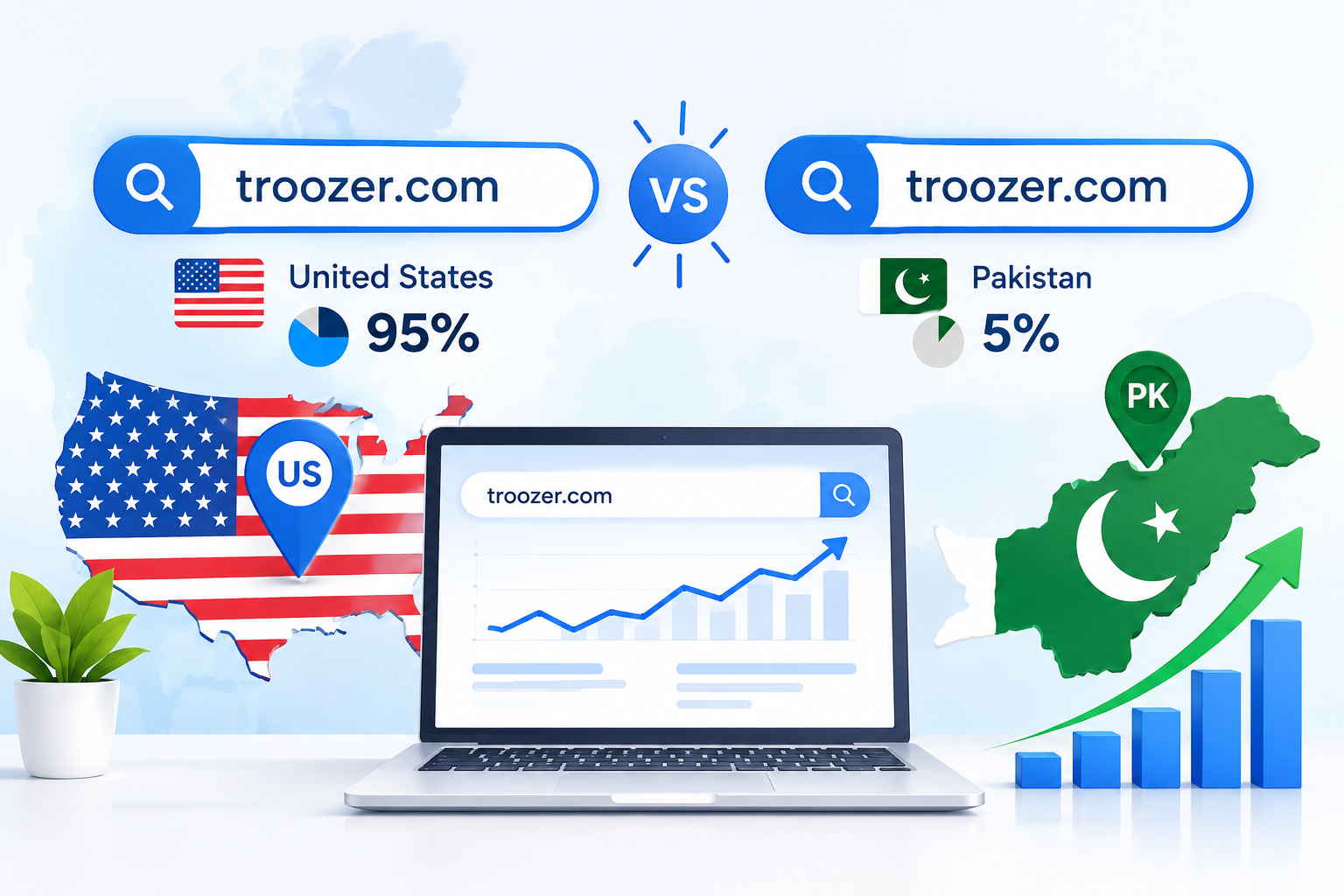

If you have ever typed “best AI writing tool” or “free design app” into Google and drowned in twenty tabs of listicles, sponsored ads, and outdated blog posts, you already understand the problem Troozer.com is trying to solve. The name has been popping up more and more in search results lately, and a growing number of people are asking the same question: what exactly is Troozer.com, and is it worth using?
This guide breaks it down in plain language — what the platform does, how it works, who it’s built for, and what to keep in mind before you rely on it.
What Is Troozer.com?
At its core, Troozer.com positions itself as a curated discovery platform for online tools and software — a place built specifically to help people find useful digital products faster than a general search engine can. Instead of returning millions of loosely related web pages, the idea behind Troozer is to filter that noise down to a shortlist of tools that are actually relevant to what someone typed in.
Think of the difference between browsing a massive department store with no directory versus walking into a boutique where a knowledgeable assistant already knows exactly which shelf has what you need. That is roughly the gap Troozer is trying to close between traditional search and tool discovery.
Why a Platform Like This Exists
The number of apps, SaaS products, browser extensions, and AI-powered tools launching every month has exploded. A simple task like “remove the background from a photo” can return dozens of competing tools, half of which are outdated, paywalled after one use, or simply low quality. Sorting through that manually eats up time that most people don’t have.
Troozer.com’s pitch is to remove that friction. Rather than making users compare five browser tabs of reviews, it aims to present a small, relevant set of options up front — tools that are more likely to actually solve the problem someone searched for.
How Troozer.com Works
While the platform is still relatively new and its exact backend process isn’t published in full detail, the general workflow reported by users and early coverage looks like this:
- You enter a query describing what you’re trying to do — for example, “convert PDF to Word” or “AI logo generator.”
- The system matches your query against a database of tools that have been categorized by function, use case, and audience.
- Results are filtered for relevance, aiming to surface tools that directly answer the query instead of tangential articles or ads.
- You click through to the tool itself, without wading through unrelated search clutter.
The emphasis is on cutting steps out of the discovery process, not on replacing the tools themselves.
Who Actually Benefits From This
A platform like Troozer.com tends to be most useful for a few specific groups:
- Freelancers and small business owners who need to find a tool fast — a scheduling app, an invoice generator, a background remover — without spending an afternoon comparing options.
- Content creators and marketers hunting for AI writing, image, or video tools and wanting a shortlist instead of a flooded search page.
- Students and researchers looking for free or low-cost software for a specific task.
- Non-technical users who find app store categories and generic search results overwhelming and want something closer to a recommendation than a results page.
If you already know exactly which brand-name tool you want, a platform like this adds less value — you’d just search the name directly. Its real strength shows up when you know the problem but not the product.
Troozer.com vs. a Traditional Search Engine
It’s worth being clear-eyed about what this kind of platform is and isn’t. A general search engine indexes essentially the entire web and ranks pages using hundreds of signals, most of which have nothing to do with tool quality. A curated discovery platform narrows that universe intentionally, trading breadth for focus.
The trade-off cuts both ways:
- Pro: Fewer irrelevant results, less time spent comparing.
- Pro: A more direct path from “I have a problem” to “here’s something that solves it.”
- Con: The database only covers the tools it has indexed or been given, so it will never be as exhaustive as a full web search.
- Con: As with any newer platform, the depth and accuracy of curation is still something to judge for yourself over time rather than assume.
Is Troozer.com Safe to Use?
This is the most common question people search alongside the name, and it’s a fair one — new platforms should earn trust, not be given it automatically. A few sensible ground rules apply here, and honestly, to any unfamiliar site:
- Check what you’re clicking through to. Troozer functions as a directory pointing to third-party tools; the safety of the end tool matters as much as the directory itself. Read the destination site’s own privacy policy before signing up or entering payment details.
- Avoid oversharing personal data on any platform, including this one, until you’ve used it enough to trust its handling of information.
- Look for a visible “About” or contact page. Legitimate platforms are generally transparent about who runs them and how they operate.
- Start with free or low-stakes tools first before committing to anything paid through a link you found via a discovery site.
None of this is unique to Troozer — it’s the same due diligence worth applying to any tool-discovery or comparison website.
Practical Tips for Getting the Most Out of It
If you decide to try Troozer.com for yourself, a few habits will make the experience more useful:
- Be specific with your query. “Tool to edit video” is broad; “free tool to trim video clips on mobile” narrows results to something more actionable.
- Cross-check standout recommendations. If a tool looks promising, a quick separate search for reviews never hurts.
- Bookmark tools you actually use, rather than relying on the platform to resurface them later.
- Treat it as a starting point, not a final verdict. Discovery platforms are meant to shortcut research, not replace it entirely.
The Bigger Picture
Whether or not Troozer.com becomes a household name, it reflects a real shift in how people search for software: away from generic keyword results and toward curated, intent-based discovery. As AI-powered tools continue to multiply, platforms built specifically to organize that chaos are likely to keep appearing — and Troozer.com is one of the earlier, more visible attempts at solving that exact problem.
Frequently Asked Questions
Is Troozer.com free to use? Browsing and searching the platform itself appears to be free; individual tools it links to may have their own free or paid pricing.
Does Troozer.com require an account? Basic browsing generally doesn’t require sign-up, though some features on individual linked tools might.
Is Troozer.com the same as a search engine? Not exactly — it’s narrower by design, focused specifically on surfacing tools and software rather than indexing the open web.
How is Troozer.com different from an app store? App stores are limited to installable apps within their own ecosystem, while a tool-discovery platform like this can point to web-based tools across many categories and platforms.